

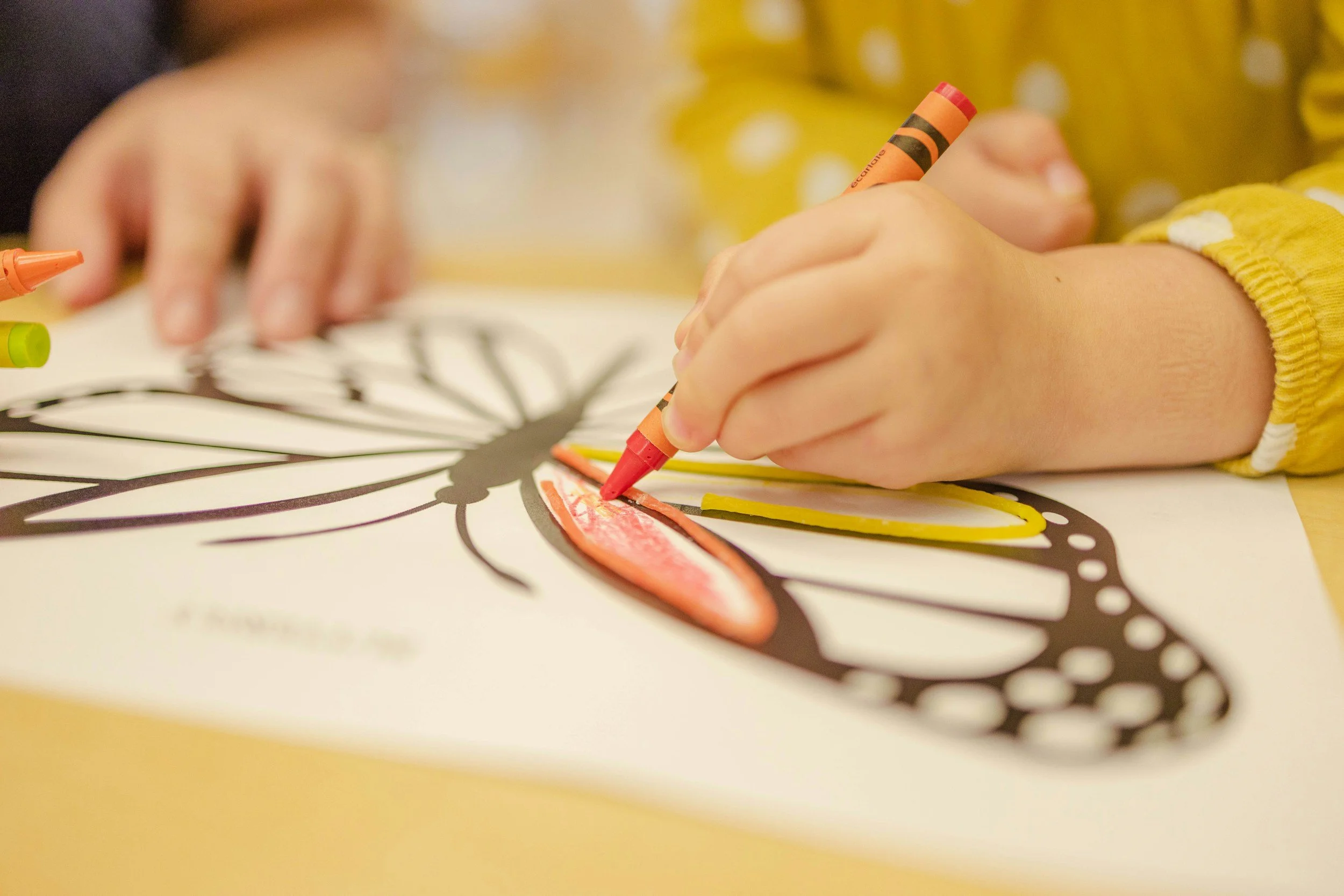
Practical sessions for a system with less room to breathe.
Zou Zou Media House offers two professional learning sessions for Ontario educators. One builds confidence teaching the arts without a specialist. One builds skill in culturally responsive practice through story. Both are led by someone who is in rooms with children every week.
THE CONDITIONS THIS WORK HAS TO FIT
Zou Zou Media House knows what year it is.
-
Boards are under supervision
As of April 2026, eight Ontario school boards are under provincial supervision, covering roughly one third of the province's schools. Central office positions have been cut. The people who once planned this work may no longer be in the building.
The Globe and Mail, April 2026
-
Equity no longer gets its own day
The Ministry's mandatory PA day topics for 2026 to 2027 are curriculum delivery, special education, school safety, and cyber safety and artificial intelligence. Inclusive practice is expected to be embedded across all of them. It has to arrive inside curriculum work now, not beside it.
Ontario Ministry of Education, 2026
-
The harm is documented and current
The TDSB's human rights office reported that race related complaints made up 69 percent of all reported hate incidents in a single school year, with anti-Black racism the largest share. In Peel, a provincial review found the board lacked the capacity and the will to address it. These are not closed files.
CBC News, 2021 and 2020
-
Staff are running on empty
An ETFO member survey found 77 percent had personally experienced violence or witnessed it against a colleague, and a majority said educational assistants, social workers and child and youth workers were available only some of the time, rarely, or never.
ETFO member survey, Stratcom
So these sessions are built to a different standard. No framework to implement later. No homework. Educators leave holding materials they can use on Monday morning, in the room they actually teach in.
WHY THE ARTS, AND WHY NOW
The curriculum is detailed. The training behind it isn't.
-
16%
of Ontario elementary schools with Grades 7 or 8 report having a specialist visual arts teacher. The rest of the arts curriculum falls to classroom teachers.
People for Education, Arts Education, 2018
-
1
arts course is all an Ontario elementary teacher candidate is required to complete, against a curriculum that demands in-depth knowledge.
People for Education
-
10,548
students in the first large-scale randomized controlled trial of arts education in real schools. It found fewer disciplinary infractions, stronger writing achievement and greater empathy.
Bowen & Kisida, Journal of Policy Analysis and Management, 2023
SESSION 01
Making Meaning
2 hours 20 minutes | Compresses to 60 minutes | All materials supplied
For classroom teachers, early childhood educators, educational assistants and library staff who are asked to deliver the arts without an arts background.
This isn't a session about becoming an art teacher. It's about what happens to reading comprehension, oral language and classroom behaviour when a book and a pair of scissors land in front of a child in the same hour. Zou Zou Media House runs this model weekly with children from Kindergarten through Grade 8, and this session hands over the structure behind it.
Why making moves reading
20 MIN
The evidence, delivered quickly and honestly. What the research supports, what it doesn't, and how to answer a principal or a parent who asks why students are cutting paper instead of doing guided reading.
The read-aloud as a design brief
25 MIN
A title is read live and the room is taken through it the way a class would be. Where to stop, which questions open a group and which close it, and how one page of a picture book becomes a making task with a clear success criterion.
Mediums, mess and a budget of nothing
30 MIN
Collage, printmaking, textile, clay and mixed media, sorted by cost, time and cleanup. Includes the two age streams Zou Zou Media House runs, what changes between them, and how to keep 28 children working from one set of supplies.
The child who won't start
25 MIN
Written for classrooms where support staff aren't always available. Entry points for the child who freezes, the child who rushes and the child who is dysregulated before the lesson begins, plus how the act of making can settle a room.
Build one unit before you leave
40 MIN
Hands-on. Each participant takes a text they already teach and builds a single read-aloud plus making sequence with a partner, on the planning frame. They leave with something finished, not something to finish later.
Participants leave with
A one-page planning frame for turning any text into a read-aloud plus making sequence.
Three unit outlines ready to run next week, with the discussion questions written out.
A costed material list, with substitutions that keep it inside a school budget.
A short reading list of the research, so the practice can be defended in a staff meeting.
SESSION 02
Every Child in the Room
2 hours 20 minutes | Compresses to 60 minutes | Books with Session 01
Boards have policies, frameworks and strategies. What individual educators still don't have is the practical layer. Which book to choose. Which question to ask. What to say out loud when a child says something harmful in front of the class.
This is not a lecture on bias and it isn't a compliance exercise. It's a working session on text selection, discussion facilitation and repair, led by a published Canadian children's author whose own series centres a six-year-old girl of Caribbean and East African heritage.
Where we actually are
20 MIN
A short, non-accusatory look at what boards' own reporting shows about hate and bias incidents, and what that means for an ordinary teacher in an ordinary classroom. Grounding, not guilt. This is the shortest module on purpose.
Choosing the text
30 MIN
Selection criteria for classroom and library collections. How to tell a book that centres a child from a book that decorates with one, why a single heritage month title isn't a collection, and how to audit a shelf in twenty minutes.
The questions that open a room
30 MIN
Facilitating discussion with young children about difference, family, belonging and fairness. The questions that invite children in, the ones that shut them down, and how to hold a conversation you can't fully predict.
When harm happens in front of you
25 MIN
The moment a slur, a stereotype or an exclusion lands in the room. What to say in the first ten seconds, what the child who was harmed needs next, what the child who caused it needs, and how to follow up with families and administration.
Black history in Canada, in the elementary classroom
35 MIN
Direct support for the new learning entering Grades 7 and 8 History, and what belongs in the earlier grades so it doesn't arrive cold. Participants rework one unit they already teach, using the frame and the text list supplied.
Participants leave with
A twenty-minute shelf audit tool for a classroom or library collection.
A curated Canadian text list by grade band, with discussion questions for each title.
Written responses for the moment harm happens, and a follow-up sequence for afterwards.
One unit they already teach, reworked before they leave the room.
BOOKED TOGETHER
A full PA day that covers both.
Run as a single day, the two sessions build on each other. The morning gives educators a repeatable structure for arts and literacy. The afternoon makes sure every child in the room can see themselves inside it.
The day maps to the mandatory topic on Consistent Classroom Delivery and New Curriculum Updates, including the 2026 Kindergarten curriculum's early literacy focus and the new Grades 7 and 8 learning on Black history in Canada. Divisional breakouts are available for larger staffs.
FORMATS
Book the length that fits the day.
Format 01
Staff meeting spark
The opening modules of either session, compressed. Enough to change how the next unit gets planned, short enough to sit inside an existing agenda.
60 minutes
Up to 40 people
In-person or virtual
Format 02
Half-day workshop
One full session including the build block. This is the recommended version, because educators who make something themselves actually use it with students.
2 hour 20 minutes
Up to 60 people
Material Supplied
Format 03
Full PA day
Both sessions in one day, with divisional breakouts if the staff is large enough to split by grade band.
Full day with break
Breakouts available
Quoted per site
Format 04
Conference session
A single breakout sized to your programming, or a keynote drawn from the opening of either session.
45 minutes to 90 minutes
Room size flexible
Quoted per event
Sessions are quoted by format, group size and travel. Rate card and sample agenda available on request.
FOR THE PERSON PLANNING THE DAY
Where this fits, honestly.
-
Not the mandatory days
Under Regulation 304, boards designate three PA days on Ministry set priorities and may designate up to four more. These sessions are built for those additional days, for school-based professional learning, and for programming outside the board calendar.
-
Curriculum aligned, on the record
Content maps to Consistent Classroom Delivery and New Curriculum Updates, including the 2026 Kindergarten curriculum and the new Grades 7 and 8 learning on Black history in Canada.
-
Documentation supplied in advance
Boards must be able to show how a facilitator's expertise connects to the Ontario curriculum. A facilitator biography, session outline, learning goals and materials list are provided ahead of time for posting requirements.
-
Everyone in the room
Written for teachers, early childhood educators, educational assistants, teacher librarians and program staff together, because in most buildings they're planning the same block.
WHO BOOKS THESE SESSIONS
Not every door runs through a board office.
Schools and boards
Additional PA days, school-based professional learning and divisional sessions, booked by principals or curriculum leads.
Federation locals
ETFO and OECTA locals running their own professional learning, independent of board calendars and board budgets.
Before and after school care
Program supervisors and site staff who deliver hours of literacy and arts time every day with no curriculum support behind them.
EarlyON and licensed child care
Early years teams building intentional literacy and arts practice with children under six.
Public libraries
Children's and programming staff developing collections and running storytime with a wider community in mind.
Conferences and symposia
Breakouts and keynotes for education, early years and library sector events.
WHO BOOKS THESE SESSIONS
Valene Campbell
Sessions are facilitated by Valene Campbell, Founder & Managing Director of Zou Zou Media House, an independent publishing and cultural programming company based in Mississauga.
She writes the books and she delivers the programming herself, in gymnasiums, library branches, child care rooms and community centres, most weeks of the year. That's why these sessions work. The content isn't assembled from a binder. It's what has been learned running the same structure with real groups of children, including the parts that failed.
Author
The Amazing Zoe children's book series, four titles published with more in development, centring a six-year-old Canadian girl of Caribbean and East African heritage.
Programming
The Visual Arts Enrichment Program, delivered in schools, libraries, child care settings and community centres across the Greater Toronto Area.
Bookmobile
Founder of the Zou Zou Media House Bookmobile, Canada's first arts and culture bookmobile and a Diamond Award winner.
Recognition
Named one of Canada's Top 100 Women to Watch.
AFTER THE SESSION
Then bring it to the students.
Educators leave able to run the structure themselves. Many sites also want the full experience delivered, with an author in the room and every material supplied.
Visual Arts Enrichment Program
A read-aloud, a group discussion and a facilitated arts block, with a new theme each week and two age streams. From $599 per 60-minute session, materials included.
Zou Zou Media House Bookmobile
Add the Bookmobile and the read-aloud happens on the bus, with a dance activation. Canada's first arts and culture bookmobile, parked in your yard.
BOOKING
Send the date and the room.
Include which session you're considering, the format, roughly how many people will attend and which grades or age groups they work with. Zou Zou Media House will return a sample agenda, a facilitator biography for your posting requirements and a quote.
Sources. People for Education, Arts Education, 2018. Bowen, D. H. & Kisida, B., Investigating the Causal Effects of Arts Education, Journal of Policy Analysis and Management, 2023, volume 42, pages 624 to 647. Toronto District School Board Human Rights Office annual report, reported by CBC News, 2021. Report on the Investigation of the Peel District School Board, reported by CBC News, 2020. Elementary Teachers' Federation of Ontario member survey conducted by Stratcom. The Globe and Mail on Ontario school board supervision, April 2026. Ontario Regulation 304 under the Education Act, and Ontario Ministry of Education, Mandatory Professional Activity Days for the 2026 to 2027 School Year.