


Writing for caregivers and older adults
The stories nobody has had time to tell.
Two facilitated writing programs. One for the people holding everything together for someone else. One for the people whose lives are full of stories that have never been written down.
Book a single session, a six session block or a twelve session program. Sessions run 60 or 90 minutes, in person or virtually, with all prompts and materials supplied.
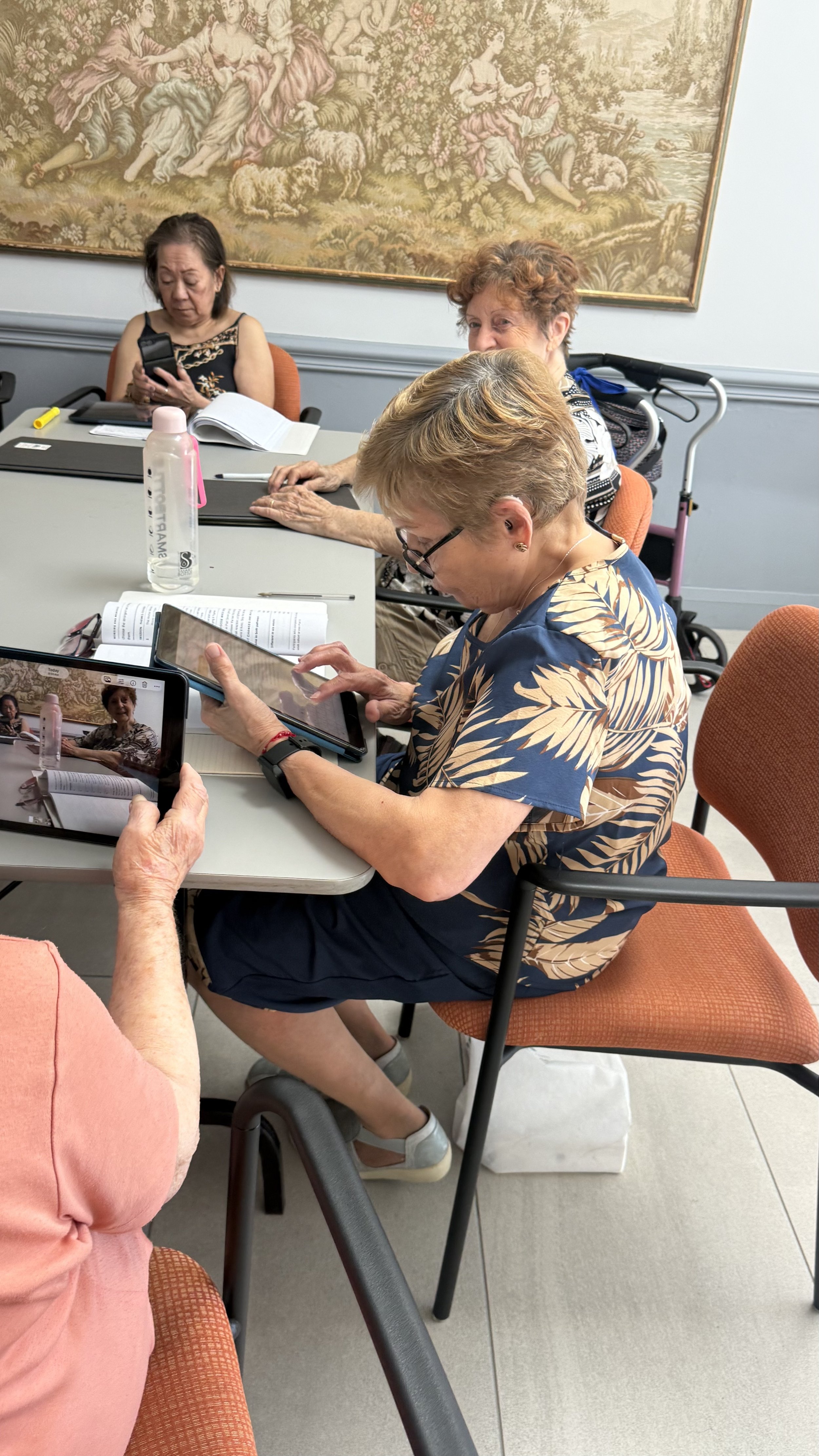
Now in residence, helping seniors and caregivers put their stories on the page.


Why this program exists
When someone we love starts to forget, we realize how many of their stories were never written down. The recipe nobody measured. The name of the ship. The reason they chose this country, this city, this life.
Memoirs and Memories was created by our founder and auhtor Valene Campbell, who is also a dementia caregiver, because those stories deserve better than being lost. It gives older adults a reason to gather, a safe place to remember, and a finished book their families will keep for generations.
It isn't a writing class. Nobody is graded. It's a guided experience built around one belief: every person's life is worth recording, and every person deserves to be heard while they're here to tell it.
Program formats
Single Day
One workshop, complete in itself. Good for a caregiver support day, a staff wellness hour, a family council meeting, or a first look before committing.
Six weeks
Weekly or biweekly. Long enough for the group to become a group and for participants to write something they did not expect to write.
Twelve weeks
A full term, moving from prompts to finished, edited pieces. This is the version that ends in a professionally published anthology.
Caregivers
Writing Through It
Written for the people holding everything together for someone else. Family caregivers, sandwich generation adults caring for a parent while raising children, and the staff who do this work professionally.
The sessions are short by design, because caregivers do not have long. Nothing is assigned between sessions. Missing a week is expected rather than a failure, and anyone can join partway through.
60 MINUTES RECOMMENDED
SINGLE, 6 OR 12 SESSIONS
HOSPICES, CAREGIVER GROUPS,
WORKPLACES AND COMMUNITY
ORGANIZATIONS
How we hold the room
Short expressive bursts. Ten to twelve minutes of continuous writing at a time, which is where most of the relief actually happens.
The unsent letter. Written to a person, to an illness, to a former version of a relationship. It is never sent and never collected.
Small joys inventory. Deliberate attention to what is still good, without ever asking anyone to look on the bright side.
Naming it plainly. Prompts give permission for the anger, the guilt and the grief, which most caregivers have nowhere to put.
Confidentiality stated out loud. Every session opens with it. Nothing is repeated outside the room and nothing is collected.
Take home prompt cards. For the nights when writing helps and there is no group to go to.
What participants tell us
Relief from carrying it alone, from one hour that belongs to them.
Less isolation, because the person across the table is living the same week.
Language for something they have not been able to explain to family or to an employer.
A record of what this time has actually been, which many are glad to have later.
No pressure to be positive, to share, or to perform being fine.
These sessions are facilitated writing, not therapy or counselling, and the facilitator is not a clinician. We work alongside hospice and caregiver organizations that provide clinical support.
Who books this
Hospices and palliative programs, caregiver support organizations, long term care family councils, faith communities, and employers running caregiver resource groups.
What we need from you
A private room where the door can be closed, seating in a circle if possible, and a group of roughly six to fifteen. Larger groups work, smaller groups often work better.
OLDER ADULTS
Memoirs and Memories
Legacy writing for older adults, ending in a professionally published anthology that participants can hand to their families.
The point is not to write a whole life. It is to get one story down properly, then another, until there is a book. Most participants have never called themselves writers, and finish the program correcting anyone who says they are not.
60 OR 90 MINUTES
6 OR 12 SESSIONS
SENIOR CENTRES, LONG TERM CARE,
HOSPICES, LIBRARIES AND
ADULT DAY PROGRAMS
How we run it
One memory per session. A first job, a kitchen, a journey, a hand me down. Small anchors surface far more than asking about a whole decade.
Senses before facts. What it smelled like and sounded like gets people writing when dates and names will not.
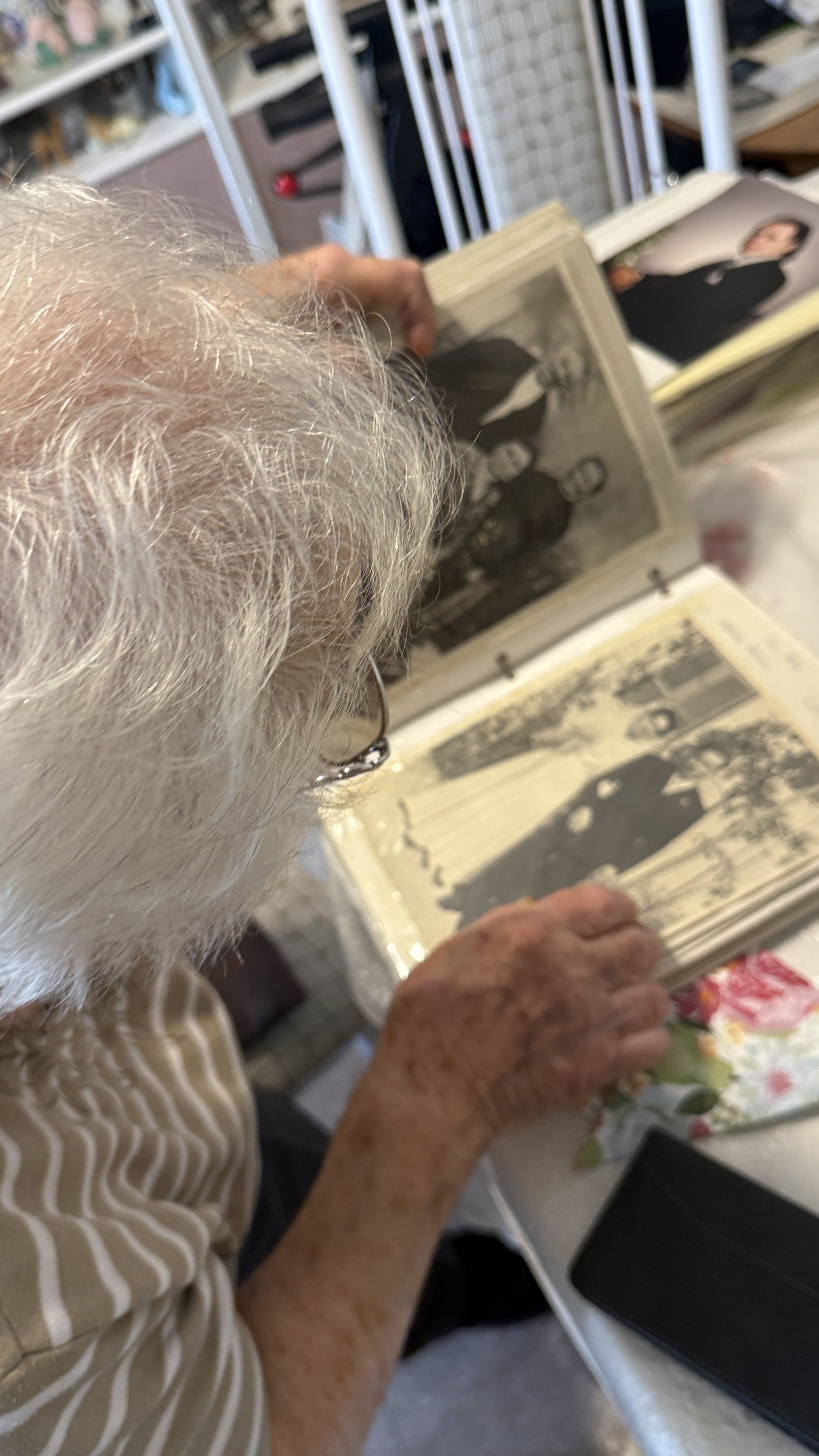
Photographs and objects. Participants bring one item and the room writes from it.
Scribing always available. Anyone who cannot write comfortably can tell their story while we take it down. Nobody is excluded by their hands or their eyes.
Read aloud in the room. Hearing the stories is half the value, and it is where the group forms.
Professional editing and publication. We edit, design, typeset and print. Participants hold a real book with their name inside it.
What it leaves behinds
A published anthology for families, grandchildren and the archive of the organization.
Cognitive engagement through recall, sequencing and language, week after week.
Real social connection, in a population where isolation is the underlying problem.
Dignity. Participants are treated as authors, not as an activity to be filled.
A launch event, if your site wants one, with families invited.
Something concrete for your programming report and your funders.
Adapted for the room you have
Large print handouts, seated work throughout, mixed cognitive ability, and shorter blocks where attention is limited. Tell us what your group needs and we will build around it.
Also available
Shared read-aloud sessions, where a facilitator reads and the group discusses. Particularly effective in dementia care settings, where a familiar text can reach someone that a direct question cannot.
What participants gain
Connection. A standing reason to show up, talk, laugh and be known by the people around them.
Being heard. Their memories are received with respect, not rushed or corrected.
Meaning and perspective. Looking back across a whole life helps people see the threads that tie it together.
Confidence. Many participants have never thought of themselves as writers. They leave as published authors.
A legacy. A real book with their name on the cover, something their children and grandchildren can hold, read and pass on.
Gentle mental engagement. Recalling details, finding words and sharing stories keeps the mind active in a way that feels like conversation, not exercise.
What families and caregivers gain
Families often tell us they learned things they never knew about the people they've loved their whole lives. The finished book opens conversations at the dinner table and preserves voices that might otherwise fade.
Caregivers can take part too. Writing about the caregiving journey, or about the person they care for, gives caregivers something they rarely get: time that's just for them, and the company of people who understand.
From faded photographs to fresh pages, participants reconnect with their past, with each other and with the stories only they can tell.
For senior care and hospice partners
Memoirs and Memories addresses several priorities at once. It supports cognitive engagement, reduces social isolation, provides meaningful legacy work for palliative and end-of-life clients, and produces a tangible keepsake families treasure.
Partners receive:
A trained, experienced facilitator
Program documentation to support your reporting and funder requirements
Accessible materials designed for older readers
Flexible delivery that fits your schedule, space and budget
A finished book that showcases your organization's impact to families, funders and the wider community
What participants receive
A printed participant handbook designed for readability, including large, clear type for readers with low vision
Weekly facilitated sessions, in person or online
Editorial support on their own writing
A professionally published anthology with their name on the cover
A completion certificate
What the research tells us
Memoirs and Memories is a creative program, not a clinical treatment. It's built on the same principles of reminiscence and life review that researchers have studied for decades, and the evidence for that approach keeps growing.
Loneliness is widespread. In 2025, 43 percent of Canadians aged 50 and older were at risk of social isolation and nearly six in ten reported experiencing loneliness, levels that have barely moved since 2022 (National Institute on Ageing).
It's not just Canada. In the United States, one in three adults aged 50 to 80 reported feeling lonely some of the time or often in 2024, and 29 percent felt isolated (University of Michigan National Poll on Healthy Aging, published in JAMA).
Looking back helps. A 2024 meta-analysis of 42 randomized controlled trials involving 3,361 older adults found that life review and reminiscence had a large, significant effect on late-life depression.
Groups and time matter. A 2023 meta-analysis of 27 studies and 1,755 older adults found that group reminiscence improved life satisfaction, with significant gains when programs ran longer than eight weeks. That's one reason our full program runs twelve weeks.
Legacy work matters at end of life. A 2024 systematic review and meta-analysis found that dignity therapy, which centres on creating a legacy document, improved quality of life, hope and dignity-related distress for people receiving palliative care.
The need is growing. As of July 2025, about 8.1 million Canadians, or 19.5 per cent of the population, were aged 65 and older (Statistics Canada).
Where it runs
Currently delivered at Villa Charities and Hospice Toronto. Available to senior centres, hospice organizations, retirement residences, long-term care homes, community centres and caregiver support organizations.
Frequently asked questions
Do participants need writing experience? Not at all. Many participants haven't written anything longer than a grocery list in years. The facilitator guides every step.
What if someone can't write by hand? They can tell their stories aloud. We make sure their words still reach the page.
Can caregivers or family members join? Yes. Caregivers are welcome as participants, and families can form their own private group.
Is the program available in other languages? Yes. Interpreters are available for an additional fee, and we've delivered programming for multilingual groups.
How does online delivery work? Participants join a live, facilitated video session each week. We'll help your group get set up before the first session.
Do you work outside the Greater Toronto Area? Yes. We serve groups across Canada and the United States, internationally, online and in person.